| Status: | Active, open to new members |
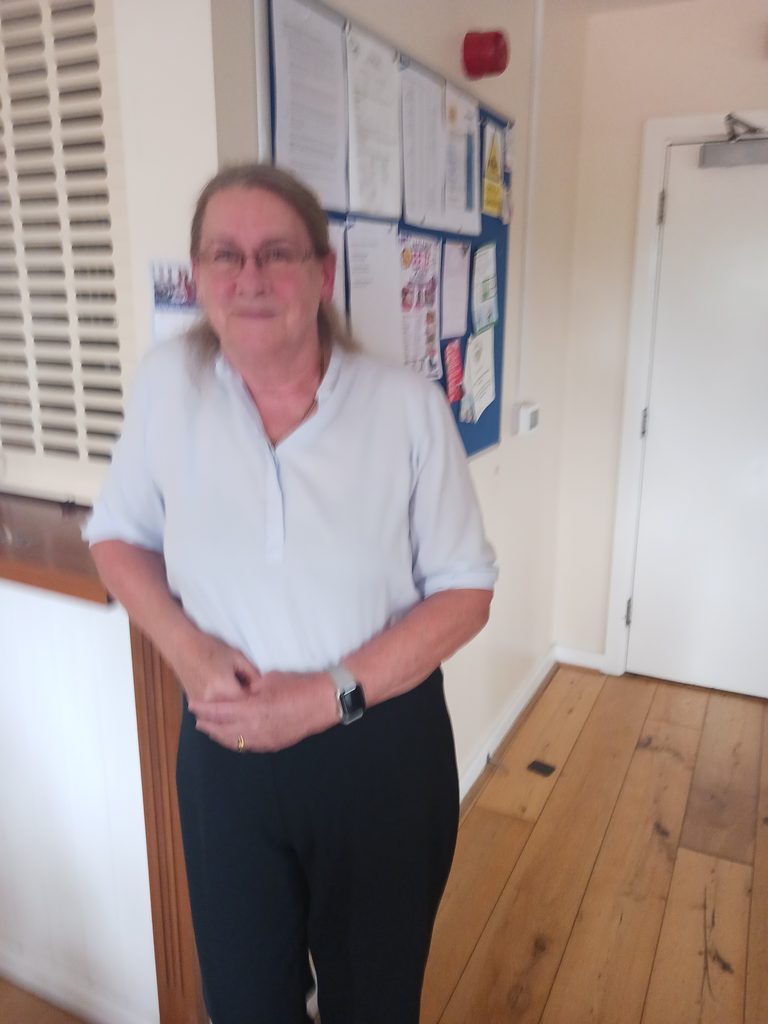
| Convenor: | |
| Group email: | Discovering Science group |
| When: | Monthly on Friday afternoons 1st Friday of each Month at 14.00 |
| Venue: | Hazlemere Memorial Hall |
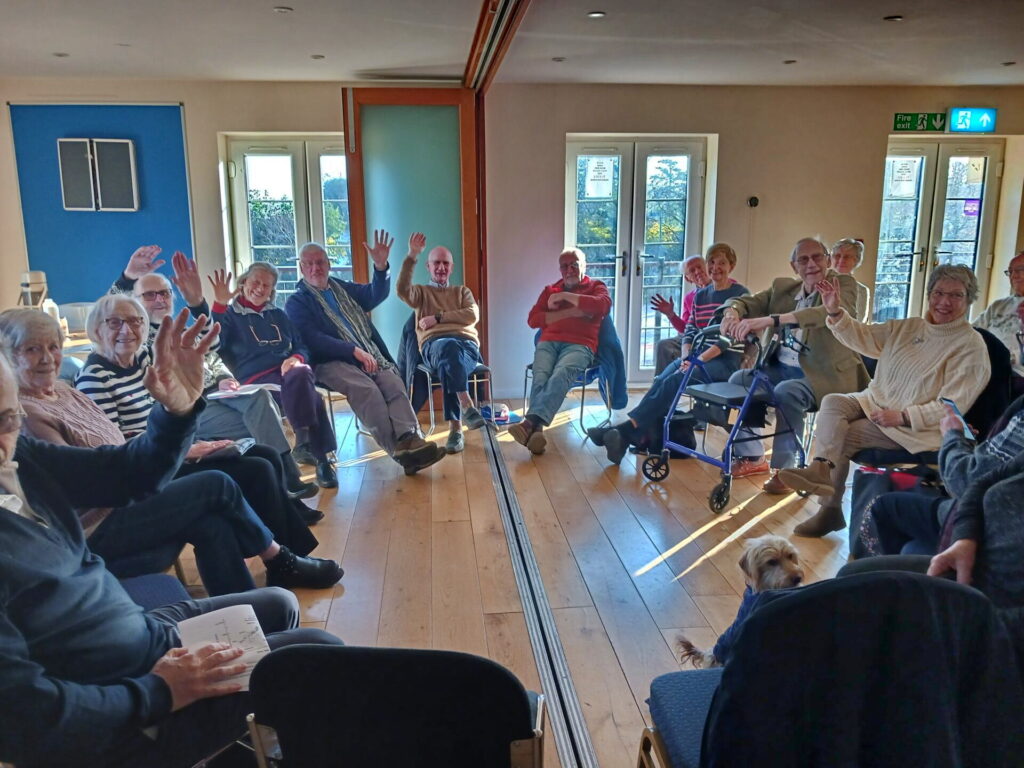
Typically our meetings last for two hours with a refreshment break to rest the brain. We enjoy a mix of stimulus from guest speakers undertaking key scientific research to videos on a whole host of topical scientific subjects. We are curious about anything related to science from Astronomy to Zoology
entistry. which is certainly a wish that will come true.
Each month our meeting focusses on a topic. In the past we have looked at:
- A river boiling in Peru,
- A better way to make Pizza,
- Carbon Footprints
- Evolution
- Management in the NHS
We learn about scientists too
Sir Frank Whittle ( jet engine) and Edward Jenner (vaccine).
New members are always welcome. No scientific knowledge is required just an interest in science. If you are interested, please contact the convenor via the link above.
Science Books
We would like to include a recommendation for reading about science on our website. If anyone has read a book on science that they think will interest other members please let us know by email
In our April meeting we looked at "Forever chemicals."
More than 9,000 different types of synthetic per- and polyfluoroalkyl substances are used to make everything from firefighting foam to the non-stick coating on cooking pans. Nicknamed "forever chemicals" because they are persistent and ubiquitous. They have been found in rainwater, soil, wildlife and humans. .Now, scientists are working on ways to clean up their long-lasting effects.
May meeting
For this meeting Michael Wright our convenor gave a most interesting and informative presentation on the life and work of Sir Michael Berry, a theoretical physicist who by the very nature of his work can go into areas of scientific research which would leave most people completely baffled. However, one of his attributes is being able to explain many aspects of the science behind everyday events in terms that make it slightly easier for the layman to understand.
June meeting
Janet High from Abingdon U3A and an experienced Radiographer provided an insight into various imaging techniques. CT, PET, Nucleid, Ultrasound and X ray
July meeting
Dr Angela Wall a lecturer in plant biology at the OU delivered an engaging talk about the properties of plants to kill and heal. We had a full house !! In addition a guest speaker from a previous visit Urvi Khaitan popped in on her way to a Harvard post.
September meeting.
Phil Platt provided a unique perspective on mapmaking. The Art and science of Cartography. Phil is the convenor of the Geology society and also has expertise on Nelson's navy.
Cartography. the graphical representation of an area, usually on a flat surface such as a map has been around since the Babylonians but was driven forward by the discovery of the New World. The arrival of aerial and satellite photography have taken it further.
October meeting
The topic was psychometric testing and focussing on the Heartstyles test. Our speaker was Dave Jones. He specialises in behaviour awareness - supporting individuals and teams to improve their ability to respond constructively to what’s going on around them, rather than just reacting to what’s going on inside them. This ultimately leads to calmer, more constructive decision-making, stronger relationships, healthier cultures, and leaders unlocking the potential of those around them.
November meeting
This month our speaker is our own Simon Cains with a talk entitled Astronomy for all wavelengths.
Simon will take us through the developments of astronomical observation that have enabled some of the most spectacular images of what has been happening in our universe. Many of the more spectacular images such as the Pillars of Creation have been taken by the James Webb telescope and can be found on the Sky at Night website and recently published in a book by Prof Maggie Aderin-Pocock.
February 2025 meeting
This month Sarah Turton a herbalist and iridologist from Oxford came to talk to us about herbal medicine and iridology
Sarah explained how she prepares preparations for each individual based on their issues. The session challenged us to think about non mainstream medicine in a different way.
April 2025 Meeting
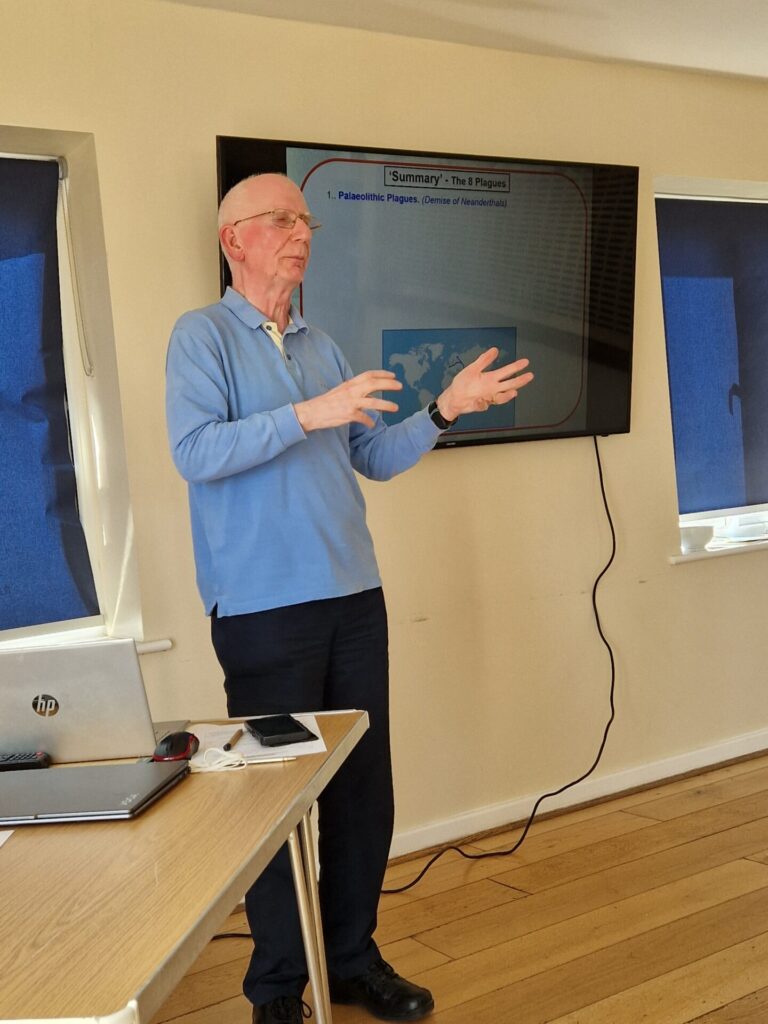
Keith Spencer (pictured) gave us a wonderful talk entitled "Squatters in a bacterial world" based on Pathogenesis by Jonathan Kennedy. We are the squatters in a world that has been shaped by bacteria. Keith's engaging and enthralling talk took us through 8 major plagues that have changed the course of history. From those in the Palaeolithic age through to the modern day plagues like HIV/AIDS, Ebola and Covid.
The book, Pathogenesis is now on the reading list of many who attended the talk.
May 2025
This month we had two talks which were entitled "Seeing with Sound". Ian West told us about Ultrasound from his background in the industry. Simon took us through scanning the Earth from above.
June 2025
We heard two insightful interviews from the Life Scientific series obtainable through BBC Sounds. Henry Marsh CBE FRCS a renowned Neurosurgeon who was based at St Georges Hospital. Also Athene Cavendish. Professor of Experimental Physics at the Cavendish Laboratory Cambridge University. Her discussion contained thoughts on why so few women progress with a career in Physics.
July 2025
We were presented with an update on the destruction of two Ecosystems: The Kakapo in New Zealand and the Blind Dolphin in the Yangtse river China
August 2025
The topic will return to the lives of scientists we were keen to hear about last time but we didn't have enough time for.
Sept 2025
The topic was the 'new' science neuroaesthetics.
Some time ago Michael floated the idea that at our meeting in December we would have an interactive session with each of us telling the group something about a British invention or discovery that we would save from a sinking ship. Continuing the theme of a shipwreck we would want to save some of the British scientists (or scientists working in Britain), but which ones. As the boat fills we might have to throw one of them overboard, but which one. I am asking for volunteers to talk about the scientist and why we might save them.
November 2025
Solar Panels, the trials, tribulations and benefits.
This month Richard Williams is going to discuss his experience on having solar panels installed. What he learnt on his journey and one unexpected benefit that resulted in a substantial back payment from the electricity supplier. This is not an overtly technical presentation about solar panels other than the basic principals.
For December
Next month we will have an interactive session with each of us telling the group something about a British invention or discovery that we would save from a sinking ship. Continuing the theme of a shipwreck we would want to save some of the British scientists (or scientists working in Britain), but which ones. As the boat fills we might have to throw one of them overboard, but which one. I have two volunteers so far (Karen and Keith) and I am hoping a few more will champion a British scientist to see if we agree they are worth saving.
I am planning to repeat the pizza experiment. Two pizzas made with the same ingredients but slightly different dough. See which you prefer. There will also be an impossible cake as well as the usual fig rolls.
January February 2026
No meeting in January.
February 2026
At the Dicovering Science February meeting we were provided with a real treat when our guest speaker, Ibtisam Attar, gave us a fascinating talk about Mouth Microbiome.
We learnt the Microbiome is a community of hundreds of different bacteria, fungi and microbes that naturally live in one’s mouth.
This is a mini ecosystem that hopefully all exist in balanced harmony, helping to protect your oral and general health.
When the Microbiome becomes unbalanced it can be harmful. For example, if harmful bacteria grow too much (called dysbiosis) it can lead to.
Plaque accumulation.
Gum infection.
bad breath.
Inflammation.
Tooth loss.
Out guest speaker Ibtisam gave us sound advice about how we keep the mouth’s Microbiome balanced and healthy.
The talk was very well researched and delivered with confidence, with Ibtisam fielding many questions from the floor during her talk as well as holding an ‘any question’ session at the end of her lecture. This would normally be unsurprising except that Ibtisam was a 14 year old student from one of our local schools. Ibtisam told us she wished to have a career in dentistry. which is certainly a wish that will come true.
March 2026
We had a guided tour through the periodic table. It celebrated some British discoveries including one very local man. Some video clips of classic chemistry experiments with flames and explosions. After a break for refreshments we covered how some of our elements were made, and mentioned an unsolved physics puzzle - why are we here, and why are there any elements at all ?
April / May 2026
With our meeting day for April landing on Good Friday there was no science group meeting for April
Our next meeting will be on Friday 1 May when search for life we will be talking about sound. We will have a guest speaker
June 2026
This month we were very fortunate to have Mary Garbett from Princes Risborough u3a come to talk to us about Exoplanets. An exoplanet is a planet outside our solar system. Mary leads the u3a IGO (Interest Group Online) Geology Group, and also is a parallel group on U3A Communities. she explained clearly how they are being used to search for life and the methods we are using
July 2026
This month Simon makes a return appearance to tell us about Isotopes. That they are and how they differ from "normal" elements and everything else. For those of you who have experienced Simon's talks know that they are always entertaining in revealing this we never knew.
August 2026
After receiving many positive comments about them we are planning another Campfire. The format of these is after listening to a short topic we can discuss it and our views on it. Michael may have some suggestions for discussion points but there is always room for different views.
September 2026
We enjoyed a fascinating presentation from Caroline Searing from South Bucks U3A. The subject area being the world of cosmetics. How were they formulated from the extensive list of bizarre ingredients that are available to the industry